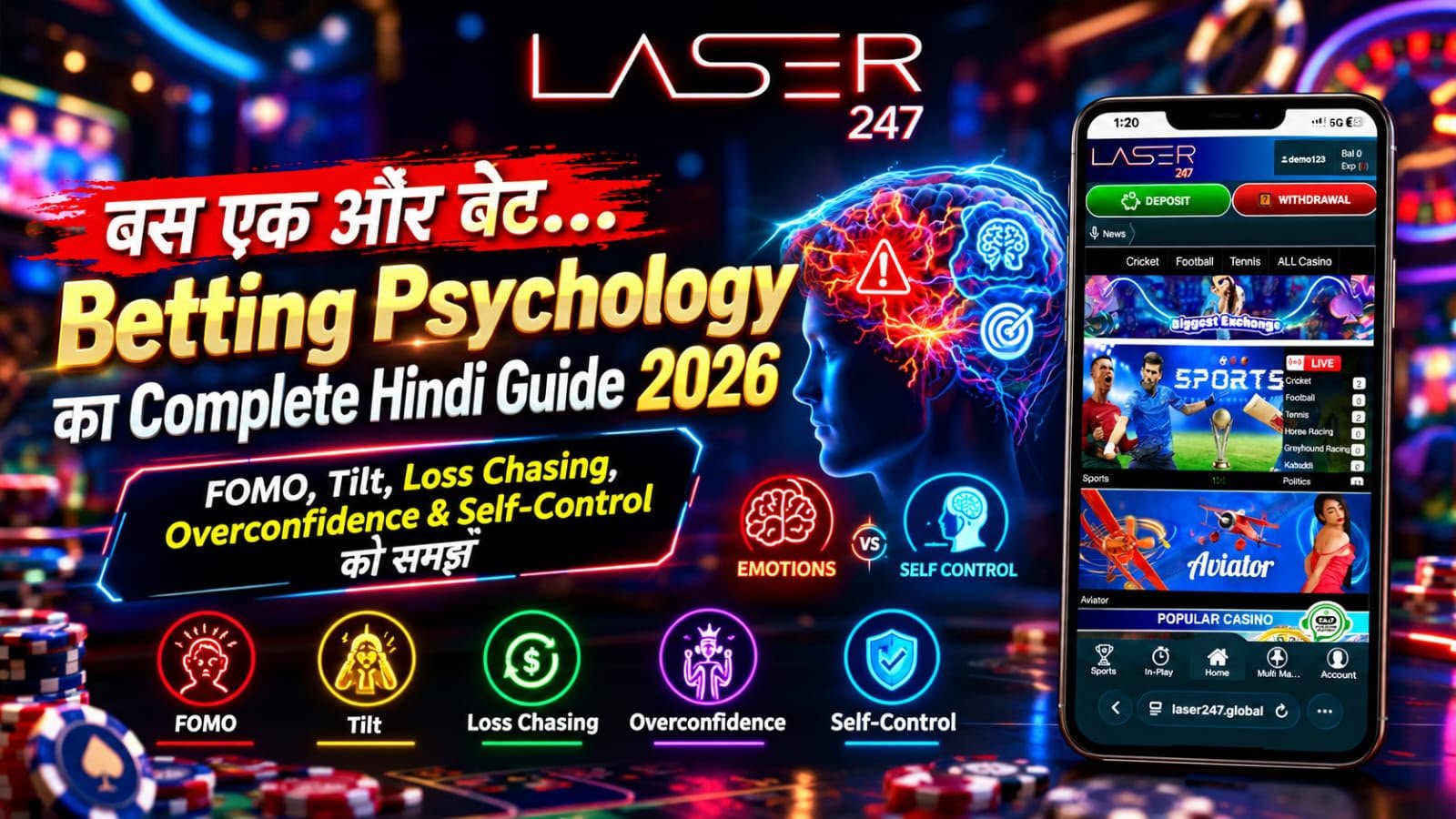
FOMO, Tilt, Loss Chasing, Overconfidence & Self-Control Ko Samjhein
Betting Psychology Kya Hai? Odds Se Pehle Brain Ko Samjho
Betting psychology wo internal process hai jo define karti hai ki ek human brain risk, reward, uncertainty aur odds ko dekhkar kaise evaluate karta hai aur decision leta hai. Jab aap kisi sports match ya casino outcome par odds dekhte hain toh aapka brain sirf mathematical numbers nahi dekhta; balki wo potential profit, excitement aur personal biases ko mix karke ek chemical aur emotional reaction generate karta hai.
Simple words mein, betting psychology yeh samjhati hai ki kyon do alag-alag log same odds ko dekhkar bilkul alag choices karte hain, aur kyon ek person calm condition mein logical decisions leta hai lekin emotionally charged situation mein risky bets place kar deta hai.
What is betting psychology?
Betting psychology is the study of how emotional states, cognitive biases, risk perception and neurological feedback loops influence human decision-making and risk-taking behavior during gambling and sports betting activities.
Sochiye ek simple situation: Rahul ek shaam apna favorite cricket match dekh raha hai. Match ka outcome unpredictable hai. Pre-game analysis karte waqt uska dimag calm hai. Lekin jaise hi odds shift hoti hain aur screen par numbers blink karte hain, Rahul ke brain mein dopamine release hota hai. Yeh neurotransmitter reward expectation se connect hota hai. Yahan se shuru hota hai wo psychological journey jo logic se zyada emotions se operate hota hai.
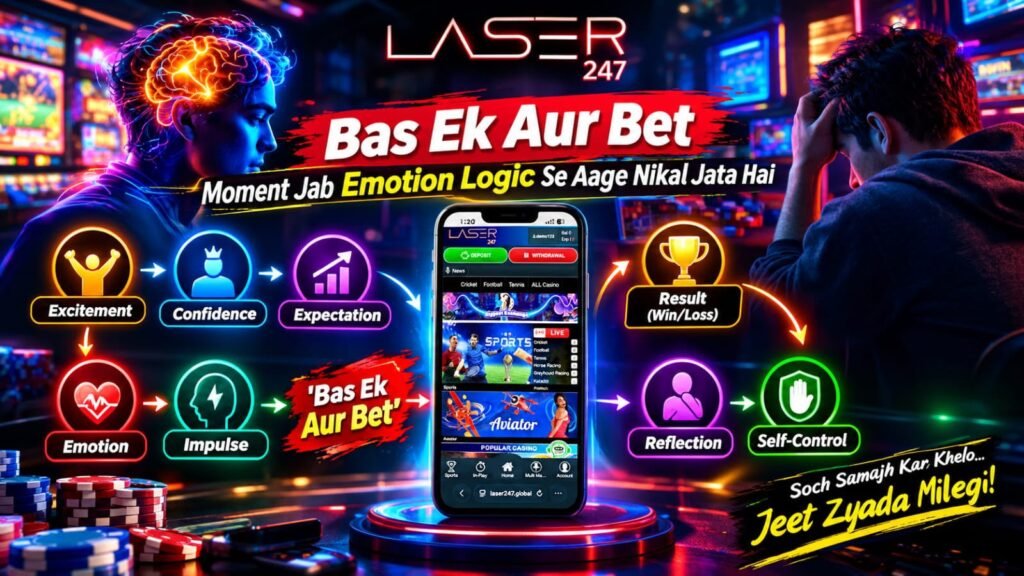
“Bas Ek Aur Bet” Moment — Jab Emotion Logic Se Aage Nikal Jata Hai
Har bettor ne kabhi na kabhi apni life mein wo pal zaroor experience kiya hota hai jab wo screen ko dekhte hue bolta hai: ‘Bas ek aur bet, phir pakka stop kar dunga.’ Yeh sirf ek sentence nahi hai — yeh ek classic psychological trigger point hai jahan emotional impulsivity aapki conscious logic ko override kar deti hai.
Human decision-making cycle aise move karta hai:
Excitement → Confidence → Expectation → Result (Win/Loss) → Emotion → Impulse → ‘Bas Ek Aur Bet’ → Reflection → Self-Control
Jab koi result humare favor mein nahi aata, toh brain loss ko ek negative threat ki tarah perceive karta hai. Ego aur frustration combine hokar impulse generate karte hain. Is impulse ka main aim result ko accept karna nahi, balki ‘loss ko turant erase karna’ hota hai. Yahi wo exact moment hai jahan emotional decision-making System 1 (fast, instinctive, emotional) activation mode mein aa jata hai aur System 2 (slow, deliberate, logical) sleep mode mein chala jata hai.
Betting Mein Brain Ke Common Biases Kaun Se Hain?
Aapka brain shortcuts pasand karta hai. Psychology mein in shortcuts ko Cognitive Biases kaha jata hai. Betting decisions mein yeh biases sabse bada role play karte hain.
Gambler’s Fallacy
Simple Meaning: Yeh believe karna ki agar koi random event baar-baar repeat hua hai toh ab opposite event hone ke chances badh gaye hain.
Everyday Example: Coin toss mein agar 5 baar lagatar Heads aaya hai toh aapko lagta hai ki 6th time Tails ‘due’ hai aur aane hi wala hai. Pure probability ke mutabiq har toss independent hota hai aur chances hamesha 50-50 rehte hain.
Why It Matters: Independent events mein past results future probability ko change nahi karte. Is bias se bachna probabilistic thinking ke liye zaroori hai.
Confirmation Bias
Simple Meaning: Sirf un facts aur statistics par dhyan dena jo aapke pre-existing opinion ko support karte hain aur baki facts ko ignore kar dena.
Everyday Example: Aapne decide kiya ki Team A jeetegi. Ab aap internet par sirf wo news padhte hain jo Team A ki strength batati hai aur uske key players ki injury updates ko completely discount kar dete hain.
Why It Matters: Yeh aapko ek false sense of security deta hai aur objective analysis karne se rokta hai.
Recency Bias
Simple Meaning: Recent events ko long-term data ya overall history se zyada weightage dena.
Everyday Example: Ek batsman ne pichhle 2 matches mein century banayi hai, toh aap assume kar lete hain ki wo har match mein score karega, chahe pitch aur opposition condition bilkul opposite ho.
Why It Matters: Recent performance temporary variance ho sakti hai, permanent capability nahi.
Overconfidence Bias
Simple Meaning: Apni knowledge, intuition ya predicting power par zarurat se zyada bharosa karna.
Everyday Example: Continuous 3 wins ke baad lagna ki ‘mujhe toh game ki puri samajh aa gayi hai, main galat ho hi nahi sakta.’
Why It Matters: Overconfidence risk assessment ko weak bana deta hai aur careless stake scaling ki taraf le jata hai.
Availability Bias
Simple Meaning: Jo memory sabse aasani se dimag mein aaye, uske base par risk calculate karna.
Everyday Example: Kisi friend ke big win ki story sunkar yeh lagna ki win karna bohot common aur easy hai.
Why It Matters: Visual aur dramatic outcomes human memory mein zyada time rehte hain lekin overall statistical probability ko alter nahi karte.
FOMO — “Agar Abhi Nahi Kiya Toh Chance Chala Jayega”
FOMO (Fear Of Missing Out) ek powerful psychological trigger hai. Jab odds fast movement karti hain ya koi live event high-tension phase mein pahunchta hai, toh brain ko lagta hai ki agar abhi action nahi liya toh ek bada opportunity loss ho jayega.
FOMO direct impact daalta hai impulse control par. User bina complete analysis ya budget limit check kiye jaldbazi mein decision leta hai. Brain loss of opportunity ko immediate pain samajhta hai, jise avoid karne ke liye person impulse bet place karta hai.
Tilt Kya Hai? Jab Frustration Decision-Making Ko Affect Kare
What is betting tilt?
Betting tilt is a state of emotional frustration or anger, often caused by bad luck or unexpected losses that leads a bettor to make irrational, highly aggressive and uncontrolled decisions.
Tilt word originally Poker card games se aaya hai, lekin yeh har tarah ke gaming aur betting behavior par apply hota hai. Jab koi player unexpected loss ya unlucky event (jaise tight margin loss) face karta hai toh frustration level spikes ho jata hai.
Tilt State Ke Symptoms:
- Logical strategy ko throw away kar dena.
- Rapid speed se bina analysis ke bets lagana.
- Emotional irritation aur heartbeat increase hona.
- Focus outcome par nahi, frustration vent karne par hona.
Loss Chasing: Loss Recover Karne Ki Soch Kaise Loop Bana Sakti Hai?
Loss chasing (jaise ki psychology mein ‘escalation of commitment’ bhi kaha jata hai) tab hota hai jab ek individual previous financial loss ko turant cover karne ke liye apna bet amount badha deta hai ya repeated bets lagata hai.
The Danger Loop of Loss Chasing:
- Initial Loss → Disappointment & Threat Perception.
- Desire to Recover → Urge to break-even immediately.
- Increased Stake / Unplanned Action → Emotional Risk-taking.
- Further Unfavorable Result → Elevated Stress & Frustration.
- Heavy Emotional Pressure → Deep Loss Chasing Trap.
Is loop se nikalne ka ek hi tarika hota hai — Acceptance of Variance & Immediate Pause.
Win Ke Baad Overconfidence Bhi Ek Psychological Trap Ho Sakta Hai
Losses hi sirf psychological risk create nahi karte, consecutive wins bhi brain ke chemistry ko alter karti hain. Wins ke baad brain mein Dopamine aur Serotonin level high hota hai, jisse ‘Winner Illusion’ create hota hai.
Jab koi person continuous success experience karta hai, toh wo randomness aur statistical variance ko apni personal skill samajhne ki galti kar baithta hai. Result? Next decisions mein risk management follow nahi hota aur over-leveraging shuru ho jati hai.
Odds, Probability Aur Gut Feeling Mein Difference
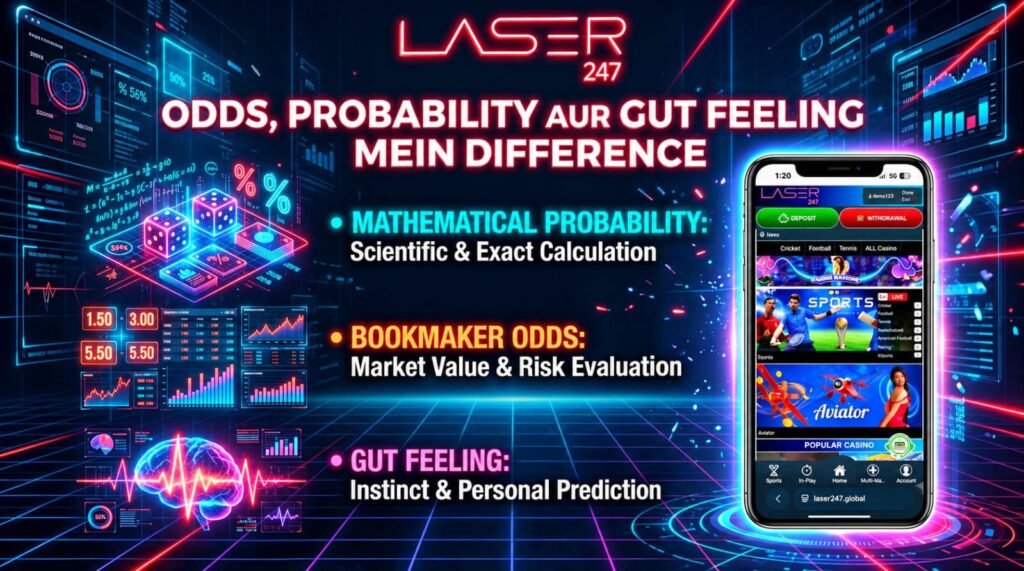
Betting psychology ka core foundation yeh samajhna hai ki Odds, Probability aur Gut Feeling teeno bilkul alag concepts hain:
- Mathematical Probability: True numerical chance of an outcome occurring based on statistics.
- Bookmaker Odds: Calculated numerical representation of risk, margin and market balancing.
- Gut Feeling: Emotional intuition filtered by personal memory, biases and desires.
Jab user Gut Feeling ko Probability samajhne lagta hai, tab decision-making accuracy drop ho jati hai.
Emotional Betting Ke Warning Signs
Self-awareness ke liye in behavioral warning signs ko pehchanna bohot zaroori hai:
- Pre-planned budget limit ko violate karna.
- Emotionally stressed, angry ya depressed hone par bet place karna.
- Result ke baad extreme mood swings experience karna.
- Losses ke baare mein sochkar sleep disorder ya anxiety feel hona.
- Loss ko hide karne ki koshish karna.
Better Self-Control Ke Liye Practical Pause Points
Self-control over-night develop nahi hota, iske liye procedural pause points install karne hote hain:
- The 15-Minute Rule: Jab bhi loss ke baad immediate bet lagane ka urge aaye, timer lagakar minimum 15 minutes screen off kar dein.
- Pre-Set Limits: Activity shuru hone se pehle fixed session limit aur financial limit strict set karein.
- Decision Logging: Har decision ke peeche ka reason ek paper par 1 sentence mein likhein. Agar reason emotional lag raha hai toh step back karein.
- Detach Outcome From Emotion: Entertainment budget ko expense treat karein, expected yield nahi.
Casino, Sports, Slots, Aviator Aur Poker Mein Psychology Kaise Differ Kar Sakti Hai?
- Sports Betting: Yahan analysis ka illusion (Illusion of Control) zyada hota hai kyunki user sports knowledge par over-rely karta hai.
- Live Casino & Teen Patti: Social dynamics, live dealer speed aur visual stimuli immediate reactions push karte hain.
- Slots & Aviator: Fast cycle speed, high frequency of near-misses (jab outcome almost-win ke paas lagta hai) instant dopamine spikes create karte hain.
- Poker: Direct peer-to-peer competition mein ego management, patience aur tilt control central skills hote hain.
Better Control Starts With Better Awareness — Laser247 B2C Experience Ko Samjhein
Entertainment experiences ko safe, seamless aur disciplined rakhne ke liye platform-level transparency aur user awareness sabse critical pillars hain. Laser247 B2C ecosystem user experience ko optimized, streamlined aur clear rakhne ke liye design kiya gaya hai, taaki users bina friction aur ambiguity ke apne digital choices ko execute kar sakein.
Laser247 B2C Panel modern operational workflows include karta hai jaise Auto Deposit, Auto Withdraw aur Auto Bonus integrations, jo user transaction speeds ko simplify karte hain. Features jaise Every Deposit Bonus, Referral Bonus, Weekly Loss Back aur Auto Deposit with Referral Bonus platforms par promotional structures streamline karne ke liye provide kiye jate hain.
Lekin psychological perspective se, user awareness yahan sabse bada factor hai. Promotional offers ya account features kabhi bhi risk-reduction mechanisms nahi hote aur na hi financial recovery strategies. Users ko hamesha har promotional component ke terms, conditions, qualification limits aur wagering terms ko complete discipline aur clarity ke saath samajhna chahiye. Intelligent participation ka matlab hai platform utilities ko convenience ke liye use karna, bina emotional control ko lose kiye.
AllWhiteLabel247 Family Ke Digital Faces
AllWhiteLabel247 ecosystem ke under multiple digital faces exist karte hain jo diverse digital entertainment aur gaming preferences ko cater karte hain:
- 1xbetfairclub.com: Dedicated user interface and platform portal.
- RadheExch (radheexch.online): Popular digital face offering customized gaming interfaces.
- 1xbetfair.me: Specialized digital domain for streamlined navigation.
- TigerExch247: Recognized sports and live entertainment platform face.
- Laser247.global: Premium digital hub focusing on high-tier gaming, live casino, slots, and VIP sports interfaces.
- 1xbetfaircustomercare.com (1xbetfaircustomercare.com): Official support and customer assistance endpoint.
- mylaser247.site: User access and operational node.
- mylaser247.my: Direct access mirror portal.
SkyExch247, New Face Introduction
SkyExch247 (skyexch247.io) AllWhiteLabel247 family ke dynamic expansion face ke roop mein operate karta hai. Modern UI/UX, responsive layout aur interactive sports/gaming features ke saath, SkyExch247 digital interface ecosystem ko expand karta hai. Har user-facing platform ki tarah, awareness, clear limits aur responsible rules padhna pehla step hona chahiye.
Frequently Asked Questions (FAQs)
Q1: What is betting psychology in simple words? Betting psychology studies how human emotions, cognitive shortcuts and brain chemistry influence decisions, risks and choices during gambling activities.
Q2: Why do people chase losses in betting? Loss chasing occurs because the human brain perceives a loss as a threat or pain, triggering an emotional urge to immediately break-even rather than accept the outcome logically.
Q3: What is betting tilt? Betting tilt is a state of emotional frustration or anger that clouds rational judgment, causing players to make reckless and unplanned bets.
Q4: How does FOMO affect betting choices? FOMO (Fear Of Missing Out) creates artificial urgency, forcing individuals to place hasty bets on moving odds without proper analysis or budget verification.
Q5: What is the Gambler’s Fallacy? It is the mistaken belief that past random events influence future probabilities, such as expecting a red roulette outcome simply because black appeared five times in a row.
Q6: How can overconfidence lead to poor betting decisions? A streak of successful outcomes can create an illusion of control, leading individuals to overestimate their predictive abilities and ignore basic risk management rules.
Q7: What are practical ways to maintain self-control? Implementing pre-set financial limits, enforcing a mandatory 15-minute pause after losses and keeping a decision log are effective ways to stay in control.
Q8: How does Laser247 ensure smooth platform usage? Laser247 offers structured B2C workflows like Auto Deposit, Auto Withdraw and clear account management features for a seamless user experience.
Q9: “Why do I want to bet again after losing?” After a loss, your brain experiences an emotional reaction that wants to erase the uncomfortable feeling of losing, creating an impulsive urge to chase the loss instantly.
Q10: “What does taking a break in betting do?” Taking a break allows your emotional brain (System 1) to cool down, enabling your logical brain (System 2) to regain control over decision-making.
Q11: “Is gut feeling accurate in sports betting?” Gut feeling is based on emotional intuition and memory biases rather than actual mathematical probability, making it unreliable for consistent decision-making.
Q12: Why do people keep betting after losing? People keep betting after a loss primarily due to a psychological phenomenon called loss chasing. The brain perceives a loss as a threat or pain, which triggers an emotional urge to immediately break even rather than accept the outcome logically. This emotional reaction bypasses rational decision-making and creates an impulsive need to erase the loss instantly.
Q13: What does tilt mean in online casino games? Tilt refers to a state of emotional frustration or anger often caused by bad luck or unexpected losses that clouds a player’s rational judgment. When a player goes on tilt, they abandon their logical strategy and start making reckless, aggressive, and uncontrolled decisions.
Q14: How can I control my emotions while placing bets? You can control your emotions by setting strict pre-planned spending and time limits before you start. Applying a mandatory “15-minute pause rule” after a loss allows your emotional brain to cool down and helps your logical brain regain control before you make your next move.
Q15: What is the gambler’s fallacy in simple words? The gambler’s fallacy is the mistaken belief that past random events can influence future probabilities. For example, believing that if a coin lands on Heads five times in a row, Tails is “due” to happen next, even though the true chances remain 50-50 every single time.
Q16: Why is chasing losses dangerous in betting? Chasing losses is dangerous because it creates a compounding emotional trap. Increasing your stakes or placing unplanned bets to quickly cover previous losses usually leads to further emotional risk-taking, elevated stress and even heavier losses.
Q17: How does FOMO work in live sports betting? FOMO (Fear Of Missing Out) creates artificial urgency when live odds move quickly during high-tension match moments. The brain treats a missed opportunity as an immediate pain, driving players to place hasty, impulsive bets without proper analysis or checking their limits.
Q18: What is the difference between odds and probability? Probability is the true mathematical chance of an outcome happening based on statistics. Odds are the numerical representations set by a bookmaker that reflect that risk while incorporating market dynamics and profit margins.
“Bas Ek Aur Bet” Se Pehle Ek Chhota Pause
Betting psychology ko samajhna sirf theoretical knowledge nahi hai, yeh personal decision-making clarity aur self-awareness ki key hai. Jab aap apni mental biases, FOMO triggers aur loss-chasing patterns ko recognise karna seekh lete hain toh aap emotional impulsivity ke victim banne se bach jate hain.
Agle baar jab screen par blink hote odds aapko provoke karein ya loss ke baad brain silently whisper kare ‘Bas ek aur bet’ toh wahan ek chhota pause lein. Emotion ko calm hone ka time dein, logic ko wapas steering wheel pakadne dein. Self-control hi real mastery hai.
Next time brain bole ‘Bas ek aur bet’, pehle ek second rukna. Apna decision samajhna bhi game ka part hai. Explore Laser247.global’s available gaming experience with awareness, clear limits and responsible participation.